
Understanding the Technology: What Actually Makes a Q-Switched Laser System Work
Introduction
In 2026, the aesthetic laser market will be louder than ever. Each manufacturer claims that its products meet “clinical level” standards. However, when clinic owners ask the most sincere question- “Which Q-switched laser system can really show excellent treatment effect for all my patients with various skin types?”, the answer often does not appear in the product manual.
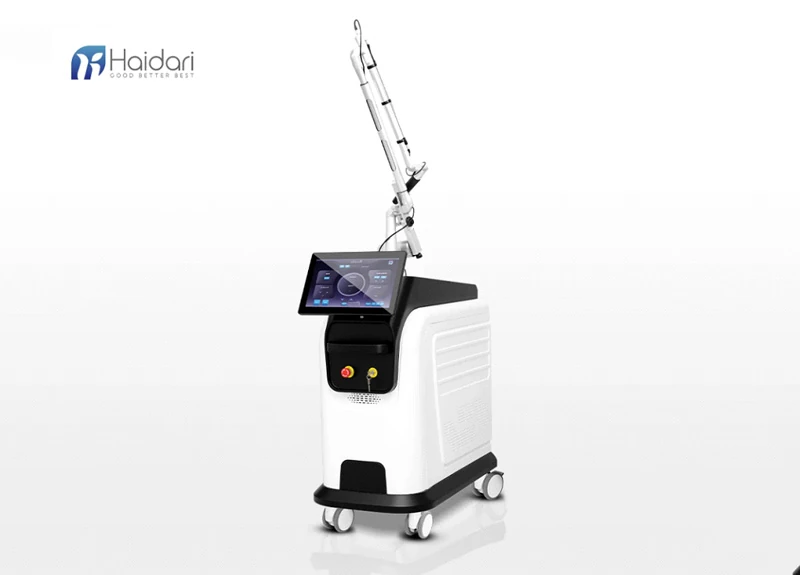
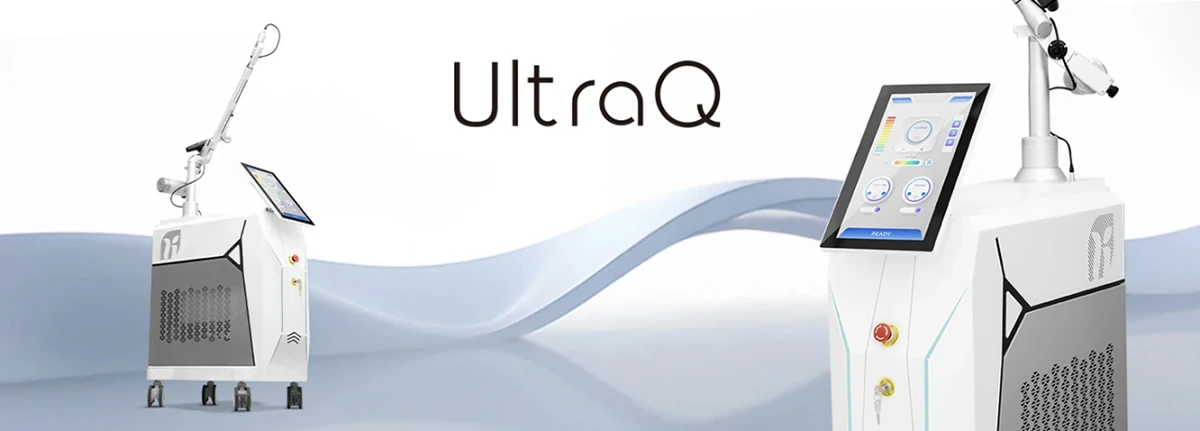
The UltraQ Nd:YAG Q-Switched Laser Machine was engineered specifically to close this gap. It moves away from bloated, power-hungry architectures, instead utilizing a highly efficient 3000 w power supply to drive a platform that integrates five distinct therapeutic modes: PTP, Picosecond, Long Pulse, Genesis, and Multi-pulse.
Its core is a real 8 mm laser rod with an imported German Heraeus lamp; these components are specially selected for beam stability and life. For the decision maker who is currently reviewing a Q-switched Nd:YAG laser supplier, this overview includes the technical specifications and operational logic that you need to carefully review before investing.
What Actually Makes a Q-switched Laser System Work
Understanding the mechanics of Q-switching is essential for any clinic investing in a Q-switched laser system. Essentially, this technology manipulates the resonator of the laser to store energy and release it in an explosion. When the Q-switched remains closed, the energy is stored in the gain medium and then released in a single nanosecond pulse, realizing the peak powers of megawatt level. (Source: Laser Institute of America, LIA):
The Nd: YAG laser uses a neodymium-doped yttrium aluminum garnet crystal as a laser medium. Its main emission wavelength is 1064nm, which is the gold standard for deep skin penetration, aiming at melanin or deeper pigments in hair follicles. For superficial lesions and vascular structures, the system uses a frequency-doubling crystal (KTP) to convert the light beam to 532nm. In addition, the wavelengths of 585nm and 650nm can be generated by using the optional configuration of a specific harmonic generator, which has been clinically proven to be highly specific for oxyhemoglobin and stubborn pigmentary lesions.
A Q-switched laser system applies this technology in controlled, high-peak-power pulses. The pulses are short enough to crush the target chromophore-melanin, hemoglobin and tattoo ink by a mechanism called selective photolysis, while keeping the surrounding tissue intact. “The principle of selective photolysis is that the laser energy can be selectively absorbed by a target chromophore, resulting in local thermal damage, provided that the pulse duration is equal to or shorter than the thermal relaxation time of the target structure.” (Source: https://www.science.org/doi/10.1126/science.6836297)
This principle is the foundation of all Q-switched laser systems on the market. What UltraQ does differently is execute it across five distinct treatment modes, each optimized for a different clinical indication, using hardware that actually delivers on its specifications. When you are looking for a reliable supplier of Q-switched Nd: YAG laser, understanding this foundation will help you to separate marketing from engineering.
UltraQ Nd:YAG Q Switch Laser Machine: Full Product Overview
Designed for high-throughput environments, the UltraQ delivers robust performance through a 3000W power supply, supporting sustained operation across its five distinct therapeutic modes. The adjustable parameters are also worthy of careful study. Pulse energy ranges from 100 to 5000 mJ. Spot size can be adjusted in the range of 2 to 10 mm. The Frequency range is 1 to 20 Hz. These are not decorative products displayed on the specification table. They are the actual operation windows that you use every day. A Q-switched laser system with a narrow parameter range will force you to compromise in clinical practice. UltraQ, on the contrary.
The five treatment modes are PTP, picosecond, long pulse, Genesis and multi-pulse. We will analyze each one in detail below, because understanding these models is the key to distinguishing between wise capital investment and impulse investment.
The Five Treatment Modes Explained in Detail
PTP Mode — For Melasma and Stubborn Pigmentation
PTP stands for Paired Twin Pulse. PTP emits not one high-energy pulse, but two sub-pulses which are closely spaced, and they are rapidly continuous. The first pulse breaks up pigment particles. The second pulse further crushes the fragments. As a result, the pigment is destroyed more thoroughly, and less heat is accumulated in the surrounding tissue.
This is very important for melasma. Melasma is the bane of every cosmetic therapist. It is stubborn, it recurs, and standard Q-switched treatment often makes it worse by triggering rebound hyperpigmentation. The PTP mode is specially designed to reduce this risk.
The clinical indications include melasma, post-inflammatory hyperpigmentation, solar freckle, freckle and brown nevus. If your practice deals with a lot of pigments, as most aesthetic practices do, this model itself proves that a high-quality Nd:YAG machine is worthy of serious consideration. Not every Q-switched laser system provides PTP. Those who do tend to charge extra. UltraQ makes it a standard configuration.
Picosecond Mode — For Tattoo Removal
Picosecond pulses operate in the picosecond range—trillionths of a second—compared to the nanosecond range of traditional Q-switched systems. The shorter pulse duration will produce a stronger photoacoustic effect. Tattoo ink is mechanically crushed into tiny pieces, which can be effectively removed by the lymphatic system.
The clinical advantage is clear: faster clearance, fewer sessions, better results on dark and green inks that resist nanosecond-only treatment. Professional tattoos, amateur tattoos, traumatic tattoos, cosmetic tattoos—Picosecond mode handles all of them. For any Q-switched Nd:YAG laser supplier that wants to compete in the tattoo removal market in 2026, Picosecond capability is no longer optional. It is mandatory. Moreover, it needs to be executed with a real picosecond pulse duration, rather than a marketing label on a nanosecond system.
Long Pulse Mode (1–5 ms) — For Vascular Lesions and Hair Removal
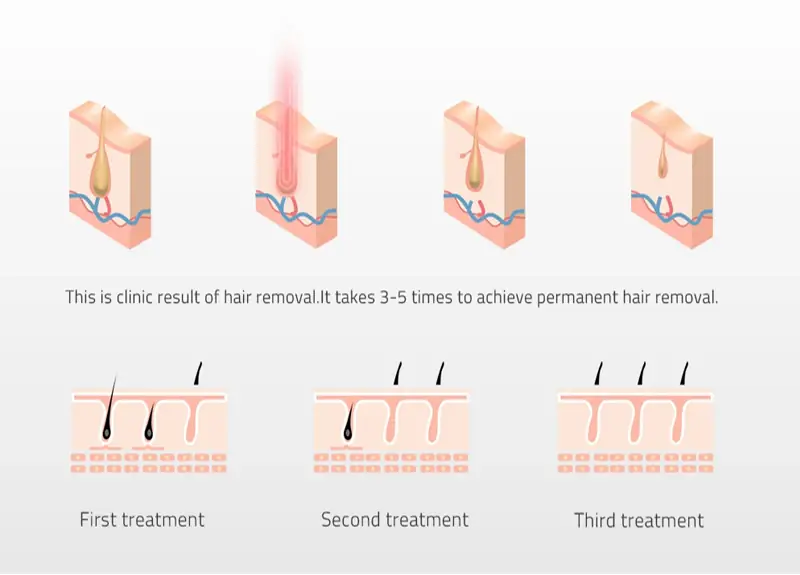
This is where the Nd:YAG machines have won a reputation for removing blood vessels and hair. The pulse duration of 1 to 5 milliseconds is matched with the thermal relaxation time of hemoglobin in blood vessels and melanin in hair follicles. This means that the laser selectively heats the target, while protecting the skin.
Clinical indications include telangiectasia, spider nevi, cherry angiomas, leg veins, and hair removal across all Fitzpatrick skin types. The keyword here is “really long pulse”. Many systems claim to be capable of long pulses, but they can only provide pulses of 0.3 to 0.5 milliseconds, too short for effective vascular therapy. UltraQ provides a true range from 1 to 5 milliseconds. If you are evaluating the vascular work of a Q-switched laser system, verify the actual pulse duration, rather than the marketing claim.
Genesis Mode — For Non-Ablative Skin Rejuvenation
Genesis mode gently heats the dermis with quasi-long pulses of 300 microseconds. The objective is not to damage the epidermis. Its goal is to stimulate the activity of fibroblasts and trigger the formation of new collagen. The formation of new collagen can improve skin texture, reduce fine lines, tighten pores and restore luster.
There is no peeling. No scaling. No social downtime. Patients walked in, received treatment, and then left. For a clinic that uses Nd:YAG machines every day, the Genesis model fills the income gap between active treatments and light maintenance agreements. This model allows patients to come back once every six weeks. And it is a mode that most budget Q-switched laser system platforms simply do not offer.
Multi Pulse Mode (1–6 mJ) — For Gentle Epidermal Work
Multi-pulse mode provides 1 to 6 millijoules of low-energy micro-pulses. It is specially designed for superficial pigmentation, skin polishing, deep pore cleaning, and sensitive skin maintenance protocol.
Think of it as the “grinding” mode. It is mild enough for Fitzpatrick type V and type VI skin, which have the highest risk of post-inflammatory pigmentation. It is also very suitable for those patients who want to get an obvious improvement without stopping the machine. A thoughtful Q-switched Nd: YAG laser supplier knows that not every patient needs active treatment. Multi-pulse mode is the safety net to build the trust of patients and protect your practice from adverse events.
UltraQ 350ps Q-Switched Laser: 1.67 GW Peak Power & Full ODM/OEM Support
| Parameter | Specification |
| Output Power | 3000W |
| Wavelengths | 532nm / 1064nm / 585nm / 650nm (optional) |
| Pulse Energy | 100 – 5000 mJ (adjustable) |
| Spot Size | 2 – 10 mm (adjustable) |
| Frequency | 1 – 20 Hz (adjustable) |
| Laser Rod | Real 8 mm (German Heraeus lamp, imported) |
| Treatment Modes | PTP / Picosecond / Long Pulse / Genesis / Multi Pulse |
Frequently Asked Questions
Q1: What makes UltraQ different from other Nd:YAG machine options on the market?
A: UltraQ uses a genuine 8 mm laser rod with an imported German Heraeus lamp — not a 6 mm imitation rod. It offers five treatment modes versus the typical two to three modes found in budget Q-switched laser system platforms. The 3000W output and 100 to 5000 mJ pulse energy range also exceed most competitors.
Q2: Can the UltraQ Nd:YAG machine treat all skin types (Fitzpatrick I through VI)?
A: Yes. The Long Pulse mode and Multi Pulse mode are specifically designed for safer treatment on darker skin types. The adjustable parameters across all five modes allow clinicians to customize energy delivery for every patient. This is a critical feature for any Q-switched laser system used in diverse patient populations.
Q3: How many sessions are needed for tattoo removal with Picosecond mode?
A: Picosecond mode on UltraQ achieves faster clearance than traditional nanosecond Q-switched laser system platforms. For single-color tattoos, expect four to eight sessions. Multi-colored or resistant inks may require eight to twelve sessions. The photoacoustic fragmentation mechanism is more efficient than thermal-only destruction.
Q4: What is the expected downtime after Genesis Mode treatment?
A: Virtually none. Genesis Mode uses 300 µs quasi-long pulses that heat the dermis without damaging the epidermis. Patients may experience mild redness for one to two hours. No peeling, no scabbing, no social downtime. This is why Genesis Mode is the go-to rejuvenation protocol for busy clinics using an Nd:YAG machine for maintenance treatments.
Conclusion
If your practice needs one device that handles pigmentation, vascular lesions, hair removal, tattoo clearance, and skin rejuvenation, UltraQ is the most complete Nd:YAG machine available from a Q-switched Nd:YAG laser supplier in 2026. The German Heraeus lamp. The genuine 8 mm laser rod. Five evidence-backed treatment modes. Published clinical data. Adjustable parameters for each clinically relevant range. Please contact us directly for pricing and technical advice.