
What Is a Q Switched Nd Yag Laser? How It Works, Uses, and What to Look For
Key Takeaways
- A Q switched Nd Yag laser delivers high-energy pulses in the nanosecond range to target pigment while limiting unnecessary heat exposure to surrounding tissue.
- The 1064 nm wavelength generally reaches deeper and is commonly used for dark tattoo pigments and selected pigmentation targets, while 532 nm is more suitable for certain superficial and red-toned pigments.
- Clinics use Q-switched Nd technology for tattoo removal, pigmentation treatment, and selected cosmetic applications. Treatment choice depends on wavelength, pulse characteristics, skin type, and the target.
- Q-switched and picosecond lasers both use very short pulses to fragment pigment, but picosecond devices operate with even shorter pulses and can offer advantages for some tattoo colors.
What Is a Q-Switched Nd Laser?
A Q-switched Nd laser is a solid-state laser that uses a neodymium-doped yttrium aluminum garnet crystal as its laser medium. “Q-switched” describes how the laser stores energy and releases it in an extremely short, high-energy pulse, typically in the nanosecond range. This allows the laser to deliver substantial peak power to a target over a very short period.
In an aesthetic clinic, this technology is most closely associated with tattoo removal and pigmentation treatment. Depending on the wavelength and device configuration, Nd technology can also support selected vascular, hair-removal, and skin-rejuvenation procedures. The clinical objective changes with the wavelength, pulse duration, energy, and treatment protocol.
How Does a Q-Switched Nd Laser Work?
Nanosecond Pulses and the Photoacoustic Effect
Q-switching controls the release of stored laser energy so that a large amount of energy reaches the target within an extremely short period. A nanosecond is one-billionth of a second. The short pulse helps produce a strong interaction with pigment without keeping the surrounding tissue under prolonged thermal exposure.
For pigment and tattoo treatment, the result is often described as a photoacoustic or photomechanical effect. The laser energy is absorbed by the target pigment, producing rapid expansion and mechanical stress that breaks larger pigment particles into smaller fragments. The body can then gradually remove some of those fragments through inflammatory and lymphatic processes.
Q-switched treatment also relates to the principle of selective photothermolysis. In simple terms, this means selecting a wavelength and pulse duration that preferentially affect a target such as melanin or tattoo pigment while limiting unwanted effects on nearby tissue.
Another important concept is thermal relaxation time. This describes how quickly a heated target loses its stored thermal energy. When the laser pulse is sufficiently short compared with the target’s thermal relaxation time, heat can remain more confined to the intended structure. This is particularly useful when the goal is pigment fragmentation rather than broad tissue heating.
The treatment process can therefore be simplified into six stages:
- The laser stores energy.
- Q-switching releases that energy as a short pulse.
- The selected pigment absorbs the laser wavelength.
- Rapid energy deposition creates photoacoustic and photomechanical stress.
- Larger pigment particles are fragmented.
- The body gradually clears the fragmented material.
After treatment, the body’s natural clearance processes continue over time, which is one reason multiple treatment sessions are usually separated by recovery intervals.
What the 1064 nm and 532 nm Wavelengths Do Differently
A conventional Nd laser produces light at 1064 nm. Frequency doubling can produce a 532 nm green beam, commonly associated with KTP technology. These wavelengths interact differently with tissue and pigment because their absorption and penetration characteristics are different.
1064 nm penetrates more deeply and is commonly used for black and blue tattoo pigments. It is also used for selected deeper pigment targets. Because it is less strongly absorbed by epidermal melanin than shorter visible wavelengths, 1064 nm is generally the more suitable wavelength when treating darker skin, although treatment still requires appropriate parameter selection and clinical judgment.
532 nm is a visible green wavelength with stronger absorption by melanin and certain red-toned pigments. It can therefore be useful for superficial pigmentation and tattoo colors such as red, orange, and some purple tones. Its stronger interaction with melanin also means that clinicians need to consider epidermal pigmentation carefully when selecting treatment settings for darker skin types.
What Can a Q-Switched Nd Laser Treat?
Q-switched Nd technology has applications beyond traditional tattoo removal. The exact indications depend on the wavelength, pulse duration, device configuration, and treatment protocol.
Tattoo Removal
Tattoo ink sits in the dermis, where pigment can persist for many years. Q-switched lasers target the ink particles with very short, high-energy pulses. The resulting fragments can then be progressively cleared through the body’s natural immune and lymphatic processes.
A q switch nd yag laser tattoo removal machine commonly uses 1064 nm for black and blue pigments, while frequency-doubled 532 nm can be used for selected red, orange, and purple tones. Tattoo composition, pigment depth, ink density, location, skin type, and previous treatment history can all affect the response.
Tattoo removal is rarely a single-session procedure. Multiple treatments are usually required, with intervals that allow the skin to recover and give the body time to clear fragmented pigment. Professional tattoos, cosmetic tattoos, amateur tattoos, and traumatic tattoos can behave differently, so treatment planning should be individualized.
Pigmentation, Melasma, and Laser Toning
Q-switched Nd lasers can target unwanted melanin in selected pigmentation conditions. Short pulses allow clinicians to work with concentrated energy while limiting prolonged heating.
Potential treatment categories include:
- Freckles and superficial pigmentation
- Solar lentigines
- Selected post-inflammatory hyperpigmentation
- Certain dermal pigmentation conditions
- Melasma protocols
- Low-fluence pigment treatments commonly referred to as laser toning
Melasma deserves particular attention because it is a chronic and recurrent condition. Laser treatment may be incorporated into a broader treatment plan, but excessive thermal or mechanical stress can aggravate pigmentation in susceptible patients.
Vascular Lesions, Hair Removal, and Rejuvenation
Nd technology can also be configured for applications outside conventional Q-switched pigment treatment. Longer-pulse 1064 nm Nd devices are used for vascular and hair-removal procedures because the longer pulse duration allows controlled heating of larger targets.
Depending on the laser configuration, related treatment categories include:
- Telangiectasia and selected vascular lesions
- Spider nevi and other small superficial vessels
- Selected leg veins
- Dark, coarse hair
- Non-ablative skin rejuvenation
- Texture and pore improvement
- Selected superficial pigmentation procedures
Q-Switched vs. Picosecond Lasers: A Quick Comparison
Both technologies use very short pulses to target pigment, but their pulse durations and resulting physical effects differ. Q switch laser machine generally operate in the nanosecond range, while picosecond lasers use pulses shorter than one nanosecond. Picosecond treatment can provide advantages for some tattoo pigments, although results depend on the tattoo, wavelength, pigment composition, and treatment parameters.
| Feature | Q-Switched Nd | Picosecond Laser |
| Pulse duration | Typically nanoseconds | Less than 1 nanosecond |
| Primary mechanism | Photoacoustic and photomechanical pigment fragmentation with selective thermal confinement | Strong photoacoustic and photomechanical pigment fragmentation |
| Strengths | Established technology for tattoo and pigment treatment; 1064 nm and 532 nm configurations cover common pigment targets | Very short pulses can improve fragmentation of some tattoo pigments, particularly certain resistant colors |
| Typical tattoo-clearance sessions | Often 5–20 sessions, depending on tattoo characteristics and response | May require fewer sessions for some tattoos, but results vary by pigment and treatment protocol |
| Best-fit clinic | Clinics seeking established tattoo and pigmentation applications with appropriate wavelength flexibility | Clinics with strong demand for tattoo removal, including difficult or multicolor tattoos |
Some modern platforms combine Q-switched, picosecond, and longer-pulse operating modes in one machine. A multi-mode design can give clinics more options across different treatment categories while reducing the need to dedicate separate equipment to every application.
What to Check Before Buying a Q-Switched Nd Laser Machine
Energy, Spot Size, and Repetition Rate
Pulse energy indicates how much energy is delivered in each pulse. A wider adjustable energy range gives clinicians more room to adapt settings to different targets and treatment areas.
Spot size describes the diameter of the laser beam on the skin. Larger spots can cover more area per pulse, while smaller spots can provide more control for localized treatment. Adjustable spot sizes therefore add practical flexibility.
Repetition rate, measured in Hz, indicates how many pulses can be delivered each second. A higher repetition rate can help shorten treatment time, but it should be evaluated together with energy stability, cooling performance, and the intended clinical application.
Beam Quality and Cooling
Beam quality affects how consistently energy is distributed across the treatment spot. A stable beam profile can help clinicians work with more predictable energy delivery.
Cooling also matters during repeated operation. Laser sources, optical components, and treatment handpieces all manage heat during normal use. Effective thermal control can help maintain stable performance across longer working periods.
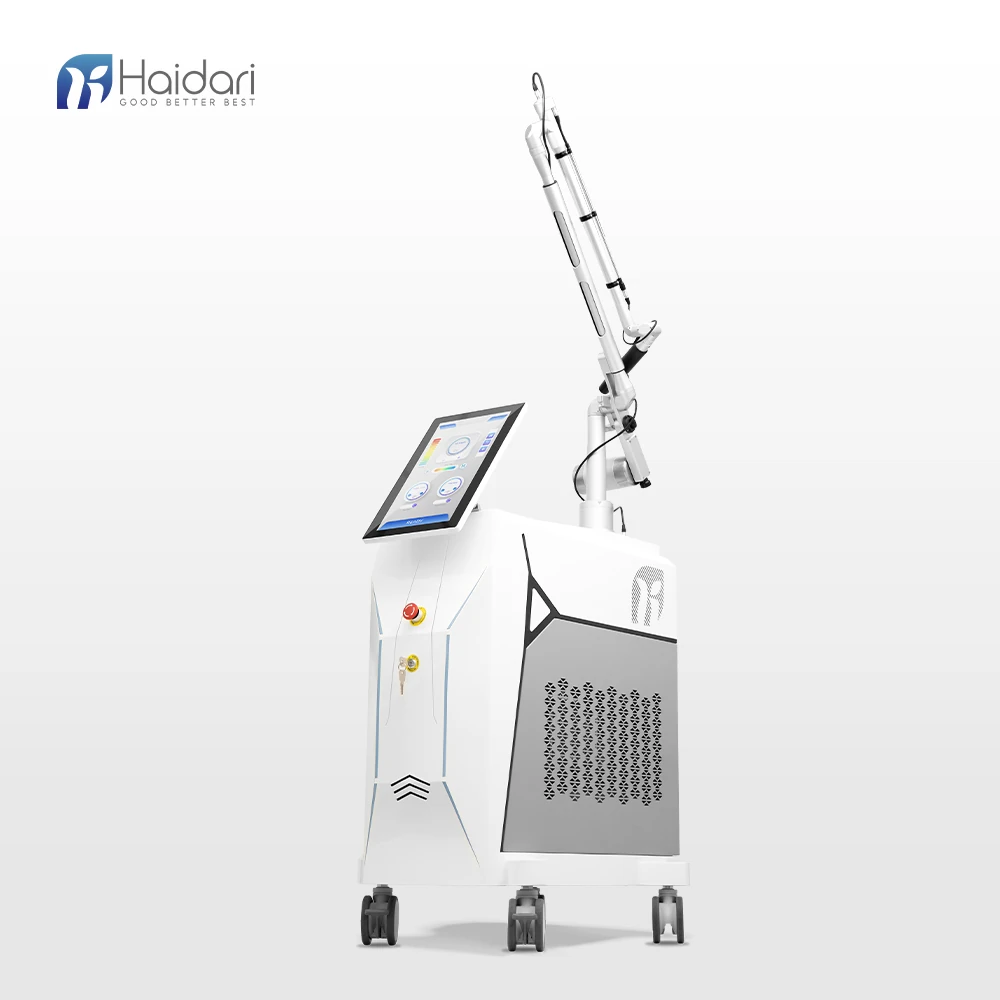
Meet the UltraQ: A Multi-Mode Q-Switched Nd Platform
UltraQ is a China-line Nd platform from Haidari built around multiple treatment modes, adjustable parameters, and several wavelength options. UltraQ includes 532 nm and 1064 nm as listed wavelengths, with 585 nm and 650 nm available as optional configurations. The platform is specified with 3000 W output power, adjustable pulse energy from 100–5000 mJ, adjustable spot size from 2–10 mm, and adjustable frequency from 1–20 Hz.
A Multi-Mode Platform for Different Treatment Objectives
UltraQ combines five treatment modes, with each mode designed for a different type of procedure.
- PTP Mode — Uses two closely spaced sub-pulses and is designed for melasma and pigmentation, including refractory melasma, post-inflammatory hyperpigmentation, solar lentigines, ephelides, and café-au-lait macules.
- Picosecond Mode — Uses an ultra-short pulse approach for tattoo removal, including professional, amateur, traumatic, and cosmetic tattoos.
- Long Pulse Mode — Uses a 1–5 ms pulse duration for vascular applications and hair removal.
- Genesis Mode — Uses a 300 µs quasi-long pulse for non-ablative skin rejuvenation and controlled dermal heating.
- Multi Pulse Mode — Uses low-energy micropulses from 1–6 mJ for superficial pigmentation, skin polishing, deep pore cleansing, and maintenance treatments.
Parameter Flexibility Across Treatment Modes
UltraQ provides several adjustable parameters for different treatment requirements. These controls give clinicians room to adjust the treatment according to the selected mode, target area, and intended application. A larger spot size can support treatment of broader areas, while a smaller spot size provides more localized control. Adjustable frequency also allows the operating pace to be matched to the procedure.
UltraQ uses a real 8 mm laser rod with an imported German Heraeus lamp.
Manufacturing and Quality Infrastructure
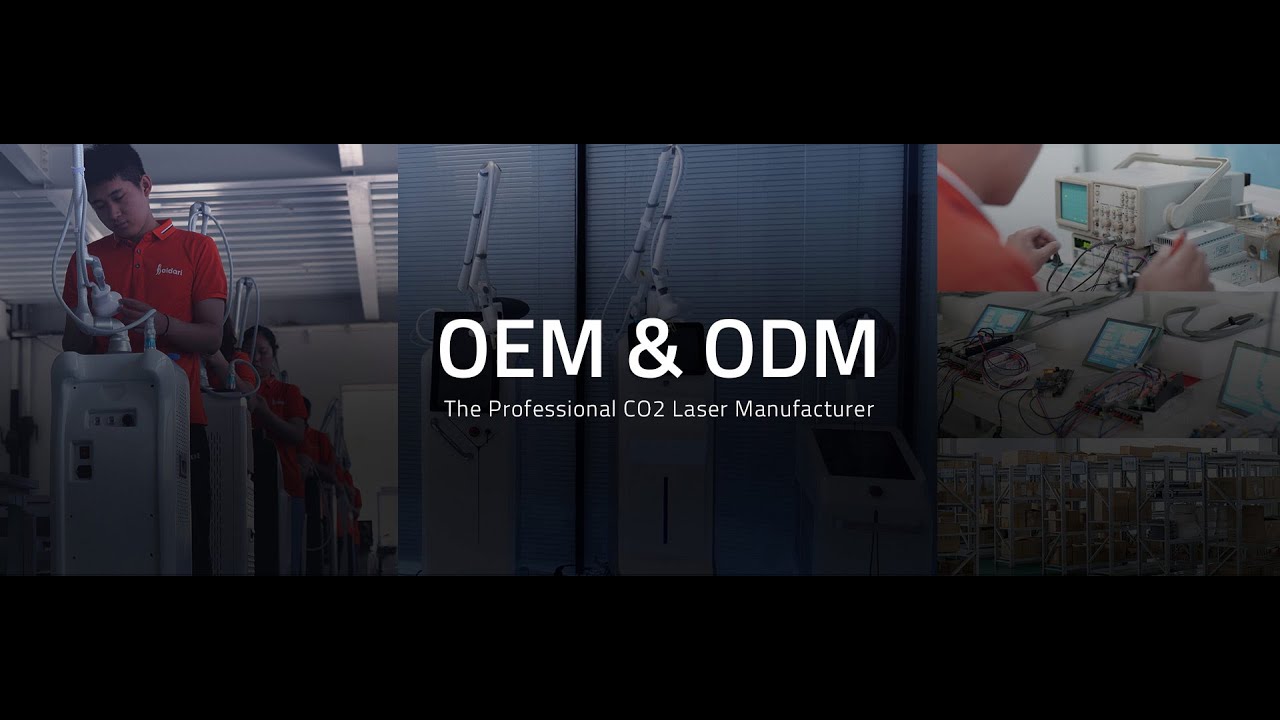
Haidari has more than 20 years of experience in laser device R&D and manufacturing, with more than 50 R&D engineers and annual production capacity exceeding 6,000 units.
The company maintains a production process that includes aging, calibration, and safety testing before shipment. Haidari also states that it uses individual testing procedures to check equipment performance before products leave the factory.
Haidari holds ISO13485, FDA, Medical CE, and EMC certifications at the company level. These certifications form part of the company’s manufacturing and quality framework for medical-aesthetic equipment.
OEM/ODM and Distributor Support
Haidari provides OEM/ODM services covering both hardware and software customization. Its customization options include interface design, multilingual support, branding, and packaging.
They also provides distributor support through territory protection, localized marketing materials, clinical training support, and joint campaign collaboration. These services can be useful for distributors building a regional aesthetic-equipment portfolio or developing a branded product line.
Warranty, Technical Support, and Training
Haidari provides 24/7 online technical response and global warranty service. Core parts are covered by a 5-year warranty.
Haidari also offer new customers with online video courses and manuals, while professional clinical trainers can be arranged for online or on-site hands-on training upon request. Haidari also provides remote diagnosis and express spare-parts delivery for equipment support.
For clinics and distributors, these services cover several stages of equipment use, from initial training and setup to technical troubleshooting and after-sales support.
FAQ
How many sessions does a Q-switched Nd laser take to remove a tattoo?
Most tattoos require multiple sessions, often around 5–20. The exact number depends on ink color, pigment depth, tattoo density, skin type, and previous treatment.
Is a Q-switched Nd laser safe for darker skin types?
It can be used with appropriate settings. The 1064 nm wavelength is generally more suitable for darker skin because it has lower absorption by epidermal melanin. Careful parameter selection is still important.
Can one machine handle both tattoo removal and pigmentation work?
Yes. Machines with multiple wavelengths can target different pigment colors and depths, making them suitable for tattoo removal and some pigmentation treatments.
What is the difference between a Q-switched and a picosecond laser?
Q-switched lasers typically use nanosecond pulses, while picosecond lasers use pulses shorter than one nanosecond. Both can fragment pigment through photoacoustic effects.
What aftercare is needed after a Q-switched laser treatment?
Protect the treated area from sun exposure, avoid irritation, and follow the clinic’s aftercare instructions. Redness, swelling, itching, or temporary pigment changes may occur.
Conclusion
Nd Yag Q switch laser machine combines very short, high-energy pulses with wavelength flexibility to address tattoo pigments and selected pigmentation concerns. Understanding pulse duration, wavelength, energy, spot size, repetition rate, beam quality, cooling, and treatment modes makes it easier for clinics and distributors to interpret specifications and match a platform to their treatment plans.
For information about UltraQ configurations, OEM/ODM requirements, technical support, or commercial purchasing, contact the Haidari team to request a quote.