
What Should Clinics Look for in a Professional 808nm Diode Laser Hair Removal Machine?
Key Takeaways for Clinics in the U.S. and International Markets
A professional hair removal system should be evaluated by laser output, fluence, cooling performance, spot-size flexibility, safety, and long-term reliability.
Clinics should distinguish laser optical output from total electrical input power when comparing equipment from different suppliers.
A qualified manufacturer should provide clear technical specifications, applicable certifications, quality-control information, training, warranty, and spare-parts support.
For B2B buyers, the best system is one that balances treatment efficiency, patient comfort, compliance requirements, maintenance, and total cost of ownership.
What Makes 808nm Diode Laser Technology Suitable for Professional Clinics?
An 808nm diode laser hair removal machine uses concentrated laser energy to target melanin in the hair follicle. The basic principle is selective photothermolysis: light energy is absorbed preferentially by the hair pigment and converted into heat, which can damage the follicular structures responsible for hair growth while limiting unnecessary exposure to surrounding tissue.
The 808nm wavelength has become widely used in professional hair-removal systems because it provides a practical balance between penetration depth and melanin absorption. However, wavelength alone does not determine treatment performance. Fluence, pulse duration, repetition rate, spot size, cooling, operator technique, and the characteristics of the patient’s hair and skin all influence the treatment process.
The effectiveness of 808nm diode laser hair removal is not determined by wavelength alone. According to the American Academy of Dermatology, laser hair-removal outcomes can vary depending on factors such as hair color and thickness, skin type, treatment area, and the professional’s experience. This is why clinics should evaluate laser output, fluence, cooling, and treatment flexibility as part of a complete system.
808nm vs. Multi-Wavelength Systems
Single-wavelength systems focus their engineering around one wavelength, while multi-wavelength platforms combine different wavelengths to address a broader range of hair and skin characteristics. A clinic serving a diverse patient population may therefore value wavelength flexibility, while a business primarily focused on conventional hair-removal services may prefer a dedicated 808nm configuration.
The purchasing decision should ultimately be based on the clinic’s target customers, treatment portfolio, operator experience, and local regulatory requirements.
Which Technical Specifications Should Clinics Check Before Buying?
When comparing professional equipment, clinics should look beyond headline specifications and examine how individual parameters work together.
Laser Power, Fluence, and Treatment Speed
Power indicates the capacity of the laser source, but it should not be confused with the energy actually delivered to the treatment area. Fluence, normally expressed in J/cm², describes energy delivered per unit area and is therefore important when evaluating treatment parameters.
Repetition rate also affects operational efficiency. A higher frequency can support faster treatment over suitable areas, but only when the cooling system and energy delivery remain stable.
A useful purchasing sequence is:
Laser source → Optical output → Fluence → Frequency → Spot size → Treatment speed
This approach helps buyers avoid comparing machines solely on wattage. A high nominal power figure has limited value if energy delivery is inconsistent or thermal management cannot support the intended workload.
Cooling Performance and Continuous Operation
Cooling is another major consideration because repeated laser pulses generate heat. Professional systems may use TEC, compressor refrigeration, air cooling, contact cooling, or combinations of these technologies.
A suitable cooling system should help maintain stable operating conditions and improve patient comfort during treatment. Buyers should ask manufacturers about cooling capacity, water circulation, temperature monitoring, safety mechanisms, and continuous operation capability.
Spot Size and Energy Distribution
Spot size influences both treatment coverage and operator flexibility. Larger treatment areas can benefit from larger spots, while smaller areas may require more precise tips.
Clinics should also examine whether different spot sizes can be changed easily and whether the optical design maintains reasonably consistent energy distribution across the treatment area.
How Can Clinics Evaluate an 808nm Diode Laser Manufacturer?
Laser Source and Manufacturing Quality
Laser bars are core components of a diode system. Their quality, assembly, thermal management, and operating conditions can influence long-term performance.
Buyers should ask for information about laser-source origin, testing procedures, aging tests, output verification, cooling design, and replacement policies.
A transparent 808nm diode laser Manufacturer should also be able to provide technical documentation that allows distributors and clinics to understand the equipment’s actual configuration.
Certification and International Compliance
Compliance is particularly important for B2B buyers importing equipment across borders. The applicable requirements depend on the destination market, intended use, product classification, and local regulations.
For professional medical or aesthetic equipment, buyers may encounter standards and regulatory frameworks such as CE requirements, IEC 60601-1 electrical safety requirements, ISO 13485 quality-management systems, and FDA requirements in the United States.
The FDA explains that some professional lasers are intended for trained professionals and that laser products are subject to specific safety and labeling requirements.
OEM, Spare Parts, and After-Sales Support
For distributors and multi-location clinics, after-sales service can be as important as the initial purchase.
A practical supplier evaluation should cover:
- OEM/private-label and UI customization options
- Replacement handpieces and spare-parts availability
- Warranty terms and response time
- Remote training and technical documentation
A strong supplier relationship can reduce downtime and make it easier for operators to maintain consistent treatment workflows.
How Should Clinics Evaluate ROI and Total Cost of Ownership?
The purchase price of a laser system is only one part of its financial impact. Clinics should consider how treatment speed, patient volume, maintenance, consumables, and equipment utilization affect the overall return.
A simple model is:
Daily Treatment Revenue = Average Treatment Price × Number of Treatments per Day
Monthly Revenue = Daily Treatment Revenue × Working Days
For example, if a system allows a clinic to shorten treatment time while maintaining appropriate treatment parameters, the clinic may be able to accommodate more appointments during the same working day. However, actual revenue depends on local treatment prices, patient demand, staffing, operating hours, and treatment protocols.
Maintenance should also be included in the calculation. Cooling-water requirements, filter replacement, handpiece maintenance, optical-window cleaning, and possible component replacement can all contribute to total cost of ownership.
Avoid making a purchasing decision based on price alone. The real question is whether the equipment will run reliably and cost‑effectively over its entire lifecycle.
Why Is LAMIS XL a Practical Option for Professional Hair Removal Clinics?
Haidari Beauty’s LAMIS XL is designed as a professional diode laser hair-removal platform for beauty salons, beauty clinics, and dermatology clinics. Its configuration focuses on high-power laser output, cooling performance, treatment flexibility, and continuous operation.
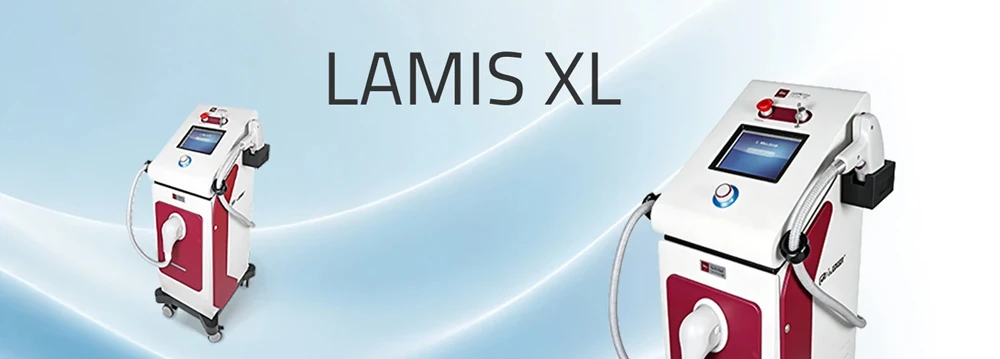
LAMIS XL Technical Specifications
| Parameter | LAMIS XL Specification |
| Laser Source | High-power diode laser |
| Laser Source Power | 1800W |
| Maximum Energy Density | 120J/cm² |
| Frequency | Up to 10Hz |
| Laser Bars | America-imported laser bars |
| Cooling | Japan-imported 500W TEC |
| Spot Tips | 4 replaceable sizes |
| Control Interface | Touchscreen |
| Continuous Operation | Designed for up to 24 hours of continuous operation |
| Certifications | CE 2014/35/EU, IEC 60601-1, ISO 13485 |
The 1800W laser source and maximum 120J/cm² energy density are intended to provide a high-output configuration for professional treatment workflows. Its frequency of up to 10Hz can support efficient treatment over appropriate areas when used with suitable parameters.
Another notable design feature is the use of four replaceable spot-size tips. The replaceable spot-tip structure is a core patented technology developed in-house, with the aim of reducing energy loss and improving cooling efficiency.
The system also incorporates a 500W TEC cooling module. For a busy clinic, cooling capacity matters because stable thermal management can support repeated operation while helping maintain treatment comfort.
A Practical Case: From IPL Limitations to Higher Treatment Throughput
An Italian beauty salon previously relied on IPL for hair-removal services but experienced limitations in treatment efficiency, particularly for dark and coarse hair. Treatment sessions reportedly took around 40–60 minutes, with the salon serving up to eight customers per day.
After switching to a diode laser system, the salon reported treatment times of approximately 15–20 minutes and an increase in daily customer capacity from eight to 20. After three months, the reported customer satisfaction score increased from 3.9 to 4.8 stars, while the referral rate increased by 40%. The salon also reported more than 560 treatments during the period and subsequently ordered two additional systems for a new branch.
Where Can LAMIS XL Be Used?
The system is positioned for several professional environments:
- Beauty salons: routine body and facial hair-removal services
- Beauty clinics: professional hair-removal treatment programs
- Dermatology clinics: clinics adding laser-based hair-removal services to their treatment portfolio
For international buyers, the combination of high-power output, replaceable spot tips, cooling technology, touchscreen control, and documented certifications can make the system worth evaluating as part of a broader equipment procurement process.
FAQ
What should I check first when buying an 808nm diode laser hair removal system?
A: Start with the laser source, optical output, fluence, frequency, cooling capacity, spot-size options, safety features, certifications, warranty, and after-sales support. These factors provide a more meaningful basis for comparison than advertised wattage alone.
Is higher laser power always better for hair removal?
A: No. Power is only one parameter. Treatment performance depends on the relationship between optical output, fluence, pulse parameters, spot size, cooling, and treatment technique. A well-balanced system can be more useful than one that simply advertises a higher wattage.
How important is cooling in professional diode laser equipment?
A: Cooling helps manage heat generated during repeated laser operation and can improve patient comfort. For high-volume clinics, buyers should evaluate cooling capacity, temperature stability, water circulation, and protection mechanisms rather than looking only at the lowest advertised cooling temperature.
What certifications should international buyers request?
A: Buyers should request documentation applicable to their target market and verify that it corresponds to the exact device model. Depending on the market and intended use, relevant documentation may include CE conformity information, IEC 60601-1 compliance, ISO 13485 quality-system certification, and applicable FDA documentation.
Can an 808nm system provide permanent hair removal?
A: Laser treatment is generally discussed in terms of long-term or permanent hair reduction rather than guaranteed removal of every hair. The American Academy of Dermatology notes that multiple sessions are commonly required, and results vary according to factors such as hair characteristics, treatment area, skin type, and operator expertise.
Conclusion
For clinics evaluating professional hair-removal equipment, the right purchase decision should go beyond price and headline power. A reliable system should combine appropriate wavelength technology, stable energy delivery, effective cooling, flexible spot sizes, manufacturing quality, regulatory documentation, and practical after-sales support.
LAMIS XL provides an 1800W high-power configuration, up to 120J/cm² energy density, up to 10Hz frequency, four replaceable spot tips, and a 500W TEC cooling system for professional applications. Clinics and distributors can evaluate these specifications against their own treatment volume, customer profile, and market requirements.
For detailed specifications, OEM/ODM requirements, certification documents, or wholesale cooperation, contact us to discuss whether LAMIS XL is suitable for your professional hair-removal business.