
1927nm Thulium Laser: Why It Targets Pigment, Not Deep Scars
Key Takeaways
- A 1927nm beam is absorbed strongly by water, so its energy stays in the epidermis and upper dermis. Superficial pigment is its natural target.
- Whether treatment counts as ablative depends on energy, pulse width and density, not on the wavelength alone.
- Deep acne scars, loose skin and deep wrinkles need other devices.
- Most courses take three to five sessions, four to six weeks apart, with one to three days of redness. Melasma needs maintenance.
What Is a 1927nm Thulium Laser?
A 1927nm thulium laser belongs to the family of fractional near-infrared devices used for resurfacing. Clinicians get the wavelength from a thulium-doped fiber source inside the console; a handpiece delivers it to the skin. Water absorbs that light far more readily than the 1550nm output of an erbium-glass system, so the heat stops almost as soon as it arrives. Practitioners therefore treat it as a superficial tool for tone and texture, not as a way to rebuild collagen deep in the dermis. Two devices both called fractional can reach very different depths.
A Wavelength Defined by Water
In aesthetic medicine, a thulium fiber laser takes its name from the rare-earth element doped into the fiber that generates the light. Water has a strong absorption band close to 1927nm, so light becomes heat within a very short distance. Clinicians can place thousands of tiny treated columns while surrounding tissue stays intact. Epidermal pigment lives exactly where the energy lands, which lets a practitioner address brown spots without heating the deeper dermis where scars form.
How the Skin Renews
Fractional delivery splits the beam into microscopic treatment zones, or MTZs. Untreated skin survives between them, and those bridges let the surface close within a day or two. Clinicians call the injured columns microscopic epidermal necrotic debris, or MENDs, because they carry pigment upward as the skin renews.
How the Technology Works
A scanning handpiece places the microbeams in a controlled pattern. Because a 1927nm laser gives up its energy so close to the surface, the treated columns stay within the epidermis and the papillary dermis. Some heat reaches deeper, yet the effect stays mild compared with a 1550nm device, which drives coagulation further down for collagen remodeling. Practitioners adjust energy, pulse duration and density to decide how assertive a session should be; higher density brings more redness, whereas lower density keeps the visit comfortable.
Why the Ablative Label Is Confusing
Clinicians describe 1927nm treatment as non-ablative, micro-ablative or semi-ablative, and all three labels can be defensible. The right one follows the settings, not the wavelength. At low energy with sparse coverage, the surface stays largely intact. Raise the energy or pack the columns closer, and tiny spots of surface tissue begin to vaporize, which earns the micro-ablative name. Conflicting claims usually reflect different configurations, not a factual disagreement.
The vocabulary holds one more trap. In urology, the phrase “thulium fiber laser” points to a different near-infrared source used to fragment stones or remove prostate tissue, not a skin platform. Adding terms such as skin, fractional or 1927 to a search keeps the two apart.
Fractional Delivery and Recovery
Redness and mild swelling usually settle within one to three days. As the tiny treated columns shed, patients feel a dry, sandpaper-like texture and often notice a faint bronze tint; flaking can last up to a week, particularly after a denser pass. Skin type, treatment area and density all shift that timeline. Zero downtime is therefore a best case, not a promise any clinic should make.
| Feature | 1927nm Thulium | 1550nm Er:Glass | 10600nm CO₂ |
| Main target | Epidermal pigment, uneven tone, early sun damage | Dermal collagen, texture, atrophic scars | Deep wrinkles, pronounced scarring |
| Where energy lands | Epidermis to upper dermis | Mid dermis, roughly 0.5-1.5 mm | Surface vaporization with a thermal zone |
| Tissue effect | Shallow coagulation, tiny surface openings | Non-ablative coagulation columns | Vaporization of the surface layer |
| Typical recovery | 1-3 days of redness; flaking up to a week | 2-5 days of redness and swelling | 7-14 days before the surface looks normal |
| Best suited for | Pigment, uneven pigmentation, photoaging, fine roughness | Acne scars, pore texture, mild laxity | Deep wrinkles, severe photodamage |
| Not the right tool for | Deep scars, marked laxity, deep folds | Superficial pigment on its own | Patients who cannot accept visible recovery |
What It Treats — and What It Does Not
Clinics usually add this wavelength when patients ask about brown spots, dull tone or early sun damage.
- Solar lentigines and sun spots on the face, chest and hands
- Epidermal melasma, provided the patient accepts maintenance and strict sun protection
- Post-inflammatory hyperpigmentation left by acne or a previous procedure
- Uneven tone and the roughness that comes with photoaging
- Fine superficial lines and mild textural irregularity
- Laser-assisted delivery of topical agents through the microchannels a session creates
Deep atrophic acne scars sit below the reach of a 1927nm beam, so promising scar revision with this tool alone disappoints the patient. Marked laxity and deep folds need collagen remodeling at greater depth, where 1550nm and ablative devices earn their place. Melasma responds unevenly when a dermal component is present and often returns once sun exposure resumes, so maintenance visits and daily photoprotection matter. Experience with Fitzpatrick V and VI skin is thinner than with lighter types; practitioners begin with conservative settings, place a test spot and wait before treating a full face.
Building a Realistic Treatment Course
A common plan runs three to five sessions, four to six weeks apart. That interval lets the surface settle before the clinician raises the energy. During the consultation, it helps to separate what a patient notices quickly from what takes time: tone often looks brighter after the first flaking phase, while texture changes build across the full course.
What Clinics Should Check in a Thulium Laser Machine
When a clinic compares a thulium laser machine with another fractional platform, the numbers that matter are the ones that shape a treatment. A short checklist keeps the comparison honest.
- Source type and stable output power through long treatment lists
- An adjustable energy range with fine steps for delicate and broad areas
- Pulse duration and density controls that can be changed independently
- Handpiece and spot size options for small zones and large fields
- Scanning patterns plus a sliding mode for faster passes
- Even beam distribution, which reduces the hot spots behind patchy redness
- Cooling, consumables and the service response a busy schedule demands
Training matters as much as hardware, since a wide energy range still produces uneven results when an operator has not learned how density changes recovery.
A Platform Built Around a 20W 1927nm Source
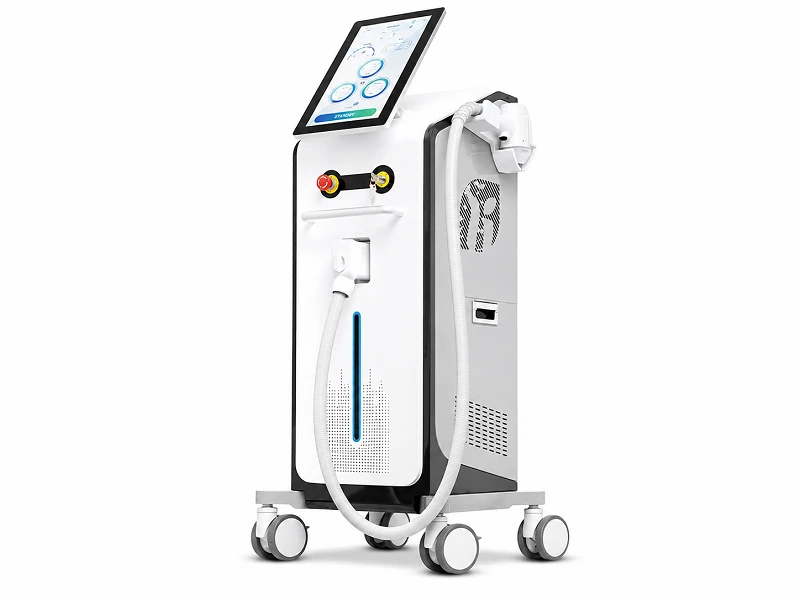
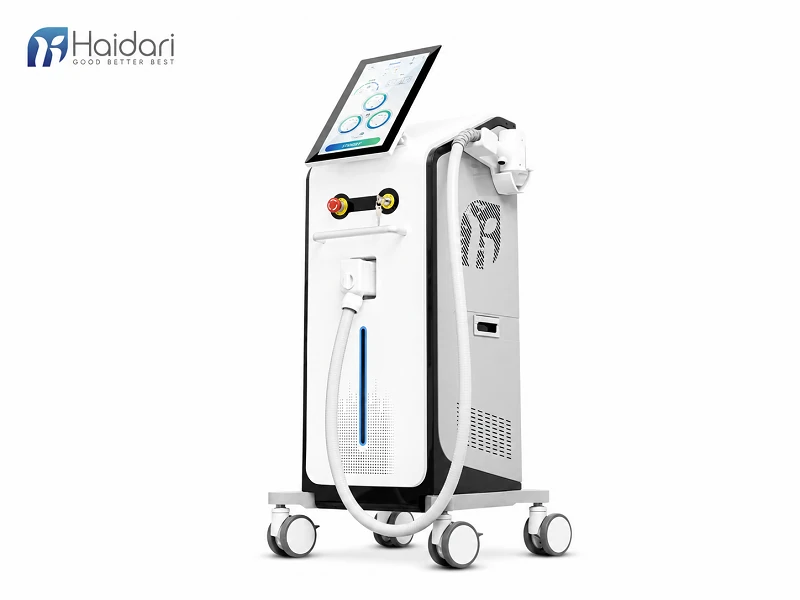
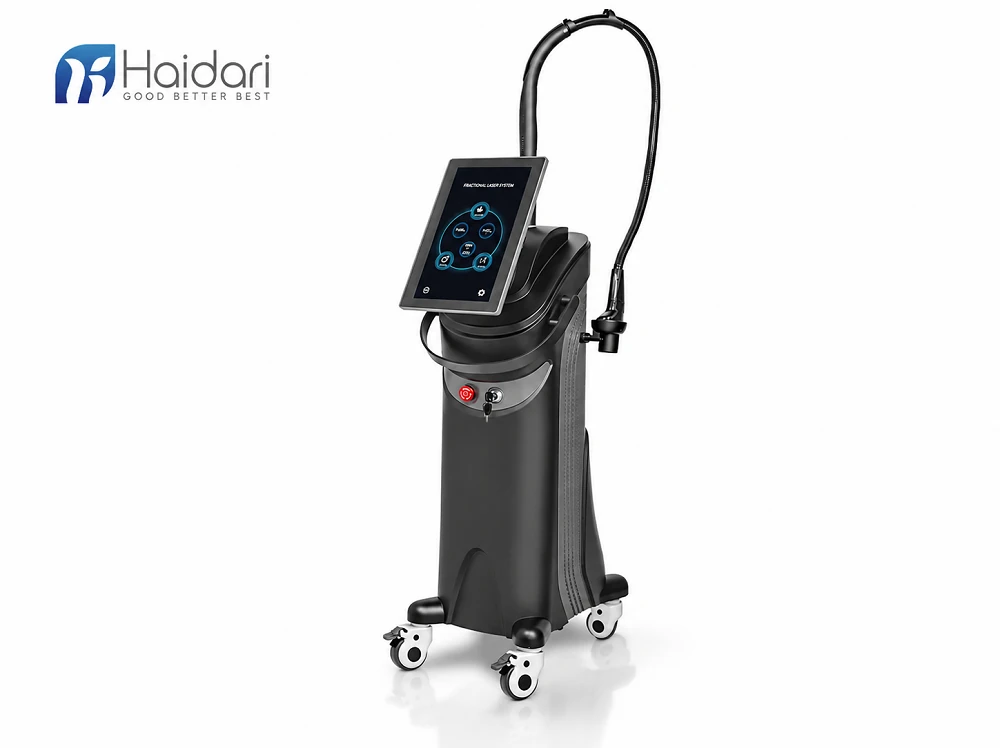
Gentlefrax PRO pairs a 1927nm thulium channel with a 1550nm channel in one fractional fiber platform, which suits clinics that want pigment work and deeper remodeling without buying two machines. Both channels can fire together, and the operator controls the energy across a wide range.
20W of 1927nm Thulium
Gentlefrax PRO delivers 20 W at 1927nm and 30 W at 1550nm. The 1550nm channel carries the higher output for deeper coagulation, while the thulium channel handles the surface. Energy adjusts between 2 and 120 mJ in fine steps, so a gentle first session and a firmer later one come from the same console.
Synchronized Delivery
Rather than running one wavelength and then returning with the other, the platform can emit both in a single session. The 1927nm light creates shallow microchannels through the epidermis, while the 1550nm light deposits heat lower down in the same pass. Practitioners who manage pigment and texture in one patient no longer need two appointments, although they set the balance case by case. When sun spots are the only complaint, the emphasis stays on the superficial channel.
Three Modes, Three Handpieces
Standard Fractional mode lays down a planned pattern, Sliding mode supports continuous movement across a larger area, and a Private mode is built in for dedicated applications. Interchangeable 5 mm, 10 mm and 20 mm tips match the field to the area at hand, from the upper lip to a full cheek. ODM and OEM options are available for distributors who need the interface and exterior adapted to their own market.
Where It Fits
A practice that already offers 1550nm resurfacing can bring epidermal pigment into the same menu; one starting fresh gets both depth ranges in a single purchase. The combination suits consultations about sun damage, uneven tone and early textural change, since those complaints rarely arrive one at a time. It does not replace an ablative CO₂ device, and it will not erase deep scars. Within that boundary, it gives a treatment menu a coherent middle layer.
Frequently Asked Questions
Is a 1927nm thulium laser ablative or non-ablative?
Both descriptions appear because the answer depends on the settings. Low energy with sparse coverage leaves the surface largely intact, which behaves like a non-ablative treatment. Higher energy or denser coverage removes tiny columns of surface tissue, so practitioners call it micro-ablative. Ask how a protocol is configured instead of looking for one fixed label.
How many sessions does a typical course involve?
Three to five sessions, four to six weeks apart, cover most pigment and photoaging plans. Patients with stubborn melasma often continue with maintenance visits, since the condition tends to return under sun exposure.
What downtime should patients expect?
Redness and slight swelling usually fade within one to three days. A bronzed tone and fine flaking may linger for up to a week, and makeup can return once the surface has closed. Denser settings extend that window.
Can it be used on darker skin types?
Practitioners do treat Fitzpatrick IV skin, although they lower the density and insist on strict sun protection. Experience with types V and VI is thinner, so a test spot and a conservative first session are the sensible route. Post-inflammatory hyperpigmentation becomes the main risk whenever settings run too aggressive.
Will it improve deep acne scars or skin laxity?
Not on its own. The beam reaches the epidermis and the upper dermis, while deep atrophic scars and laxity need collagen remodeling further down. Clinics often pair a superficial pigment course with a 1550nm or ablative plan when a patient presents with both concerns.
Conclusion
A 1927nm wavelength earns its place by staying shallow. Water takes up the light quickly, so the energy works where epidermal pigment lives, and the untreated skin around each column keeps recovery short. That same strength sets the limit: deep scars, loose skin and deep folds belong to other tools, while melasma asks for patience and maintenance. Before adding the treatment to a menu, clinics should weigh the energy range, the delivery modes, operator training and how the course will be explained to patients. If you are weighing where a 1927nm platform fits in your treatment menu, ask for a side-by-side parameter sheet and a live demonstration before you decide.