
Pico Laser Carbon Peel: How It Works, What It Treats, and What to Expect
Key Takeaways
- A pico laser carbon peel layers liquid carbon over the skin, then uses ultra-short picosecond laser pulses to shatter the carbon together with trapped oil, dead cells, and debris.
- The treatment deep-cleans pores, refines texture, and brightens the complexion with little to no downtime, which is why clinics often market it as the “Hollywood glow” facial.
- It suits oily and acne-prone skin, enlarged pores, dullness, rough texture, and mild pigmentation, while still adapting to a wide range of skin tones.
- Typical courses run three to six sessions spaced two to four weeks apart, with maintenance visits every four to six weeks.
- The laser platform matters more than the lotion: true picosecond delivery clears carbon more efficiently than Q-switched nanosecond systems in clinical comparisons.
What Is a Pico Laser Carbon Peel?
A pico laser carbon peel is a quick, non-invasive facial that combines liquid carbon with a picosecond laser. A thin layer of carbon lotion is spread over the face, where it sinks into the pores and binds to excess oil, dead skin cells, and other impurities. The laser then sweeps across the skin, and the carbon absorbs the energy and breaks apart almost instantly, which clears the pores, lifts away surface debris, and leaves the complexion visibly brighter after a single visit.
The same treatment travels under several names — carbon laser facial, carbon laser peel, or the Hollywood glow facial — but the principle is identical. A pico laser carbon peel sits between a basic facial and stronger resurfacing procedures. It cleans more deeply than manual extractions, yet it does not strip the outer skin layer the way ablative lasers do, so most patients return to their normal routine the same day.
How Does a Pico Laser Carbon Peel Work?
Understanding the mechanism explains why the treatment feels mild but still delivers visible results.
The Photoacoustic Effect, Explained Simply
Carbon particles act as a target inside the pores. When the laser beam meets them, the energy is absorbed so quickly that the carbon is shattered by a mechanical shockwave rather than burned. This is the photoacoustic effect: the pulse works like a tiny hammer, breaking the carbon and whatever it has attached to — sebum, dead cells, and pore-clogging debris — into microscopic fragments that the skin clears away naturally.
This is where pico second laser technology earns its reputation. A picosecond is a trillionth of a second, roughly one thousand times shorter than the nanosecond pulses used by Q-switched lasers, and that speed changes how the energy behaves. Instead of heating the tissue, the pulse generates a pressure wave that does the work, which is why patients feel a light snapping sensation rather than intense heat.
What Happens During a Typical Session
A standard appointment takes roughly 20 to 45 minutes. The skin is cleansed first, then an even layer of carbon lotion is applied and left to dry for five to fifteen minutes so the particles can settle into the pores. The operator guides the handpiece across the face, often in two passes: the first clears the carbon and debris, while the second, gentler pass stimulates collagen. Most people need no numbing cream. Afterward, the skin is cleaned again and finished with soothing products and sunscreen.
Who Can Benefit from a Carbon Peel?
Carbon peels are especially popular with clients who struggle with congestion and shine. The treatment can help with:
- Oily or acne-prone skin, by controlling sebum and reducing clogged pores
- Enlarged pores and visible blackheads
- Dull or tired-looking skin that needs a quick brightness boost
- Rough or uneven texture
- Mild pigmentation, sun spots, and patchy tone
- Fine lines, when repeated as part of a regular skin program
Because the energy targets the carbon rather than the pigment in the skin, the treatment is considered safe across a broad range of skin tones (the Fitzpatrick scale). Darker skin tones require conservative settings and disciplined sun protection, but they can still be treated. The procedure supports acne-prone skin by keeping pores clear; it is not a standalone cure for active acne, and inflamed breakouts need clinical judgment before treatment.
What to Expect: Sessions, Results, and Downtime
A standout feature of a carbon peel is its minimal recovery. Mild redness or warmth may last an hour or two, and most clients can apply makeup the next day. Unlike ablative resurfacing, there is no crusting, peeling, or extended wound care.
Results appear on two timelines. The immediate effect is a smoother, brighter surface, which is why the treatment is a favorite before events. The longer-term effect builds over a course of three to six sessions spaced two to four weeks apart, as repeated stimulation encourages collagen production and gradual pore refinement. Maintenance visits every four to six weeks help sustain the results.
Pico Laser vs. Q-Switched Carbon Peel: What’s the Difference?
Both technologies can perform a carbon peel, but they clear the carbon in different ways.
Table 1. Pico laser vs. Q-switched carbon peel
| Feature | Pico Laser | Q-Switched Carbon Peel |
| Pulse duration | Picoseconds (trillionths of a second) | Nanoseconds (billionths of a second) |
| How carbon is cleared | Photoacoustic shattering | Photothermal heating |
| Heat reaching surrounding skin | Lower | Higher |
| Head-to-head studies | Greater pore reduction and collagen induction | Reference baseline |
| Typical sensation | Light snapping, mild warmth | Similar, often more heat |
| Common treatment course | 3–6 sessions | 3–6 sessions |
Randomized comparisons of picosecond and nanosecond lasers for carbon-assisted skin rejuvenation found that picosecond delivery achieved roughly 41 percent greater pore reduction and more than twice the collagen induction at similar energy levels, with considerably less thermal spread to surrounding tissue. For a clinic, this difference shows up in patient comfort, the safety margin, and the number of sessions needed to reach a visible result.
Is a Pico Laser Carbon Peel Safe?
The treatment has a well-established safety record when performed by trained operators with appropriate settings. Expected reactions are limited to short-lived redness, mild swelling, or a warm feeling that settles within a few hours.
Who Should Skip the Treatment
Carbon peels are not recommended for pregnant clients, anyone with an active skin infection or open wounds in the treatment area, or those taking photosensitizing medications. A medical history review and a patch test are standard precautions before the first session.
Post-Treatment Care
Aftercare is simple but important. Clients should use gentle cleansers and rich moisturizers, apply broad-spectrum sunscreen with SPF 30 or higher daily, and avoid harsh active ingredients, exfoliants, and direct sun exposure for the first few days. These steps protect the skin while it rebuilds.
How to Choose a Pico Laser Machine for Carbon Peel
For clinics and distributors, the machine determines how well the treatment delivers on its promise. A modern pico laser system must keep its output stable across a full working day, since carbon peel sessions are often booked back to back. A few technical details deserve attention:
- True picosecond pulse width, not “picosecond-like” marketing language
- A 1064 nm output, which penetrates well and suits a wide range of skin tones
- High peak power, because carbon shattering depends on the strength of the photoacoustic wave
- A dedicated handpiece designed for carbon peeling and toning
- Adjustable spot size and energy to match different face shapes and protocols
- Reliable cooling and responsive after-sales support
The PICO RU Platform: Built Around Carbon Peel Workflow
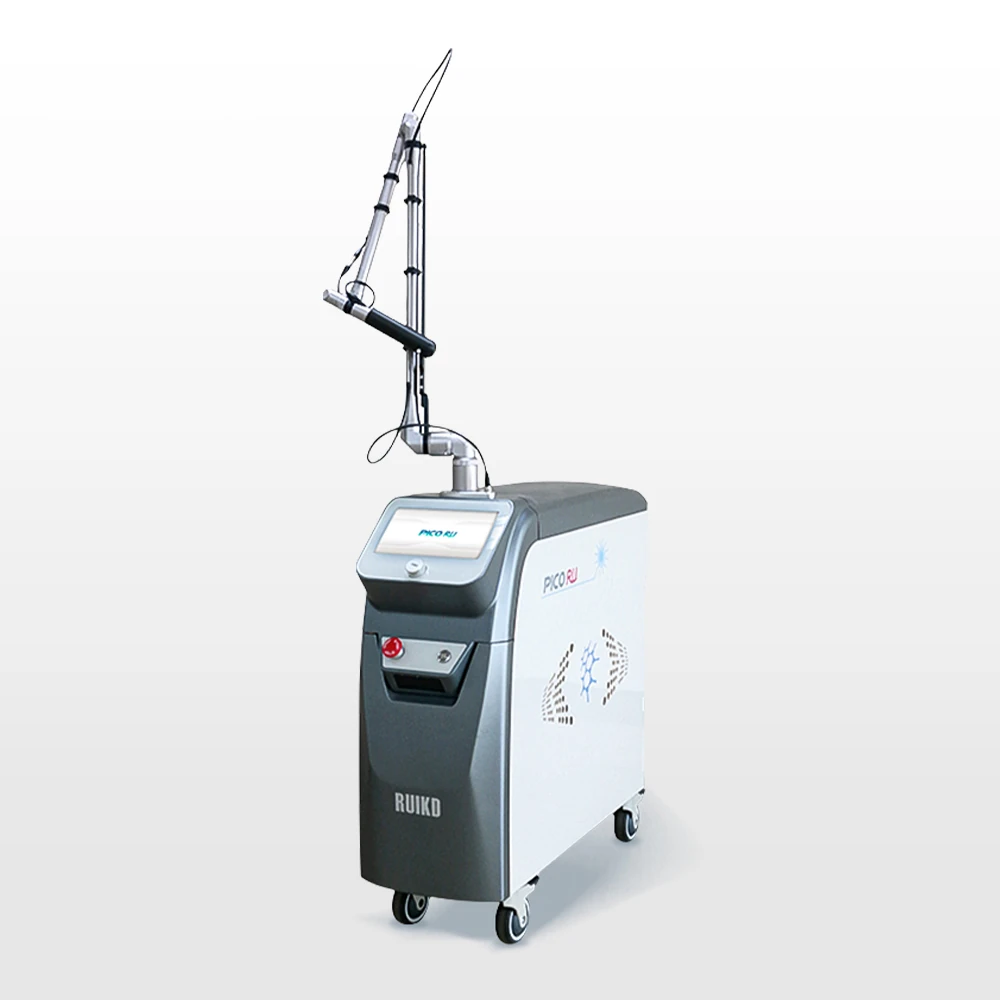
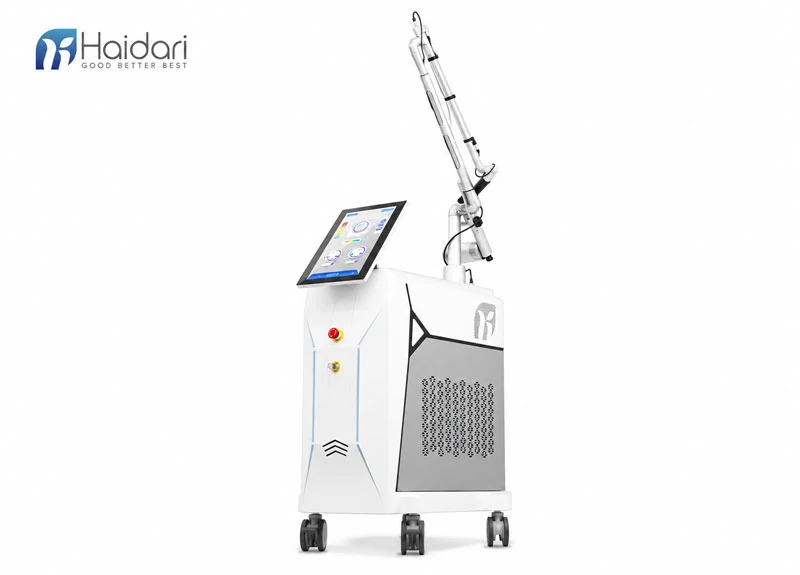
PICO RU is a true 300-picosecond laser that pairs 1064 nm and 532 nm Nd:YAG output with a peak power of 2.1 GW. Its Collimated handpiece is designed specifically for carbon peeling and toning, while a ZOOM handpiece handles pigment and tattoo work, and an MLA handpiece supports LIOB-based skin rejuvenation. Output energy reaches 600 mJ at 1064 nm, the spot size adjusts from 2 to 10 mm, and water cooling keeps the system stable at repetition rates from 1 to 10 Hz.
For a clinic adding this service, a pico laser machine needs to be dependable in daily use, and PICO RU is engineered with that in mind. Clinical before-and-after records from the manufacturer show measurable improvement in acne, wrinkles, and pore refinement after four sessions, which matches the treatment course most carbon peel protocols recommend.
One Platform, Several Revenue Streams
The business case goes beyond a single treatment. The same console that runs carbon peels can also perform laser toning, pigment clearing, tattoo removal, and MLA-based rejuvenation, so a clinic adds several menu items without buying another device. For distributors, the adjustable parameters and three specialized handpieces make the platform easy to demonstrate and easy to support.
Frequently Asked Questions
How many sessions do patients usually need for a pico laser carbon peel?
Most protocols recommend three to six sessions spaced two to four weeks apart. Maintenance treatments every four to six weeks help preserve the results over time.
Does a pico laser carbon peel hurt?
Most patients describe the feeling as light snapping with mild warmth, similar to a rubber band tapping the skin. Numbing cream is usually unnecessary, though sensitive clients can request it.
How much downtime should patients expect?
Very little. Redness or warmth typically fades within a few hours, and most clients return to normal activities the same day and wear makeup the next day.
Is a carbon peel safe for darker skin tones?
Yes, with conservative settings and proper sun protection. Because the laser targets carbon particles rather than melanin, the treatment carries a lower pigmentation risk than many other laser procedures.
Can a pico laser carbon peel treat acne?
It helps manage oily, congested skin and supports an acne treatment plan by keeping pores clear and reducing the buildup that feeds breakouts. Active or inflamed acne should be evaluated by a clinician before treatment.
Conclusion
A pico laser carbon peel offers clinics a rare combination: a service that is fast, comfortable, and low-risk, with results that clients can see immediately and build on over time. The treatment’s popularity keeps growing because it fits busy schedules and delivers on the promise of cleaner pores, smoother texture, and a brighter complexion.
For clinic owners and distributors, the key decision is the laser itself. True picosecond technology, high peak power, and a handpiece designed for carbon work determine how well the treatment performs — and how many services one platform can support. If your clinic is ready to add a carbon peel service, contact the manufacturer to request technical parameters and a quotation for the PICO RU platform.