
Painless Laser Hair Removal Machines: How Cooling Makes It Possible and What Clinics Should Compare
Key Takeaways
- Discomfort in diode hair removal comes mainly from heat at the skin surface, not from the light itself.
- Cooling works in two places: at the handpiece tip and inside the machine.
- Steady tip temperature matters more than the lowest number on a data sheet.
- Clinics should compare wavelength, spot size, pulse speed, and temperature control side by side.
- Cooling shapes comfort, session length, and how many patients a practice can see each day.
Where the Pain in Laser Hair Removal Actually Comes From
Most people assume the beam itself burns the skin. That is not quite right. Light at 808 nm crosses the upper layers in a fraction of a second. Melanin inside the hair shaft and follicle absorbs it. Heat then builds in the follicle and spreads slowly outward. Nerves near the surface pick it up a moment later. That delay explains why patients often feel a warm snap followed by a short sting.
Understanding the sequence helps for a simple reason. If heat at the surface causes most of the discomfort, then controlling surface heat should control most of the pain. That idea drives every modern diode platform.
Melanin, Heat, and the Hair Follicle
Hair grows from a follicle several millimetres below the skin. Melanin in the shaft and in the follicle acts as the target. When light energy reaches it, the energy converts to heat. The temperature climbs until the cells that feed hair growth are damaged enough to slow down. That is the part of the process that produces long-term reduction.
The same heat does not stay put. It conducts into nearby tissue and toward the epidermis. Because the epidermis also contains melanin, it absorbs a share of the energy on the way in. Operators therefore work within a narrow window. Too little energy and the follicle survives. Too much and the surface takes the hit.
Why the Skin Surface Reaches Its Limit First
Think of the skin as the wall between the operator and the target. The beam has to cross that wall twice. On the way in, the epidermis absorbs some light. On the way out, heat from the follicle radiates back through it. Both effects raise surface temperature.
Patients describe the result in familiar terms. A rubber-band snap is common. Some feel a brief hot prick. Without any temperature control, those sensations grow stronger with each pulse. More people then ask to stop mid-session, and appointments run long.
How Cooling Makes Treatment Nearly Painless
Once you see pain as a surface-heat problem, the fix becomes clearer. Keep the epidermis cool and you can deliver more energy to the follicle without upsetting the skin. A painless laser hair removal machine is built around exactly that trade-off. It manages heat at the contact point while leaving the target deep enough to do its job.
Cooling the Skin While the Follicle Still Heats
These two goals sound contradictory, yet they work together. A sapphire window sits between the handpiece and the skin. It stays cool throughout the pulse and pulls heat out of the epidermis on contact. Meanwhile the 808 nm light passes straight through that window and keeps going down. Melanin in the follicle absorbs it and converts it to heat.
Depth makes the difference. The follicle sits several millimetres below the surface, insulated by the tissue around it. Cooling acts where the window meets the skin, not deeper. The surface stays comfortable while the follicle still reaches the temperature it needs.
Lower Nerve Sensitivity at the Surface
Cold does a second job. It slows the nerves that register heat and pressure. A cooled tip has a mild numbing effect, so the same pulse feels softer than it would on warm skin. Patients often compare the sensation to a light tap rather than a burn.
That matters for a busy schedule. When discomfort falls, fewer people ask the operator to pause. Sessions stay on time, and the clinic keeps its appointment book moving. A pain free laser hair removal machine is less about erasing every sensation and more about keeping it below the level that makes people tense up.
Why a Steady Temperature Beats a Low Number
Marketing tends to highlight the coldest number a device can reach. That figure tells you very little by itself. What counts is whether the tip holds its temperature across a full session, with pulse after pulse and patient after patient.
A tip that starts cold and warms up after ten minutes gives uneven results. Early passes feel fine. Later ones sting. Operators then compensate by lowering energy, which weakens the treatment. Stable cooling avoids that drift. It also lets the practitioner work at higher fluence while the surface stays protected, so fewer sessions may be needed to reach the goal.
The Two Cooling Layers Behind the Comfort
Cooling in a diode platform happens at two levels. Knowing the difference helps a buyer ask better questions. A laser hair removal machine with cooling uses both layers, even though only one of them is felt by the patient.
Contact Cooling at the Treatment Tip
Contact cooling happens where the handpiece touches the skin. A sapphire window is held at a controlled temperature, often around 5°C in clinical devices. Sapphire conducts heat well and feels smooth against the skin, which helps the tip glide during in-motion work. The window shields the epidermis while the beam continues into the follicle. Clusters of melanin in the upper layers stay safer as a result.
Patients notice this layer first. It explains why one device feels sharp and another feels gentle at similar energy settings.
Internal Water and TEC Cooling
The second layer stays out of sight. A water loop removes heat from the laser bars, and thermoelectric modules help regulate the optical parts. This layer never touches the skin. Its job is to keep output steady during long runs.
The benefit shows up in a full appointment book. Internal cooling reduces power fade as the machine warms up. Contact cooling handles comfort at the surface. Clinics that run back-to-back treatments need both, because a drop in output changes the dose delivered to each follicle.
| Cooling method | Where it acts | What the patient feels | Performance in long sessions | Common setting |
| Sapphire contact cooling | At the skin surface | Cool, steady pressure | Consistent when paired with internal cooling | Professional diode hair removal |
| Air cooling | Over the skin | Light, uneven chill | Less stable at high repetition rates | Older or entry-level units |
| Water circulation | Inside the machine | Not felt directly | Keeps output stable for hours | Most professional platforms |
| TEC modules | Tip and optical path | Steady cool at the contact point | Helps maintain the set temperature | High-throughput clinics |
What Clinics Should Compare Before Buying
Prices vary widely, and a lower number does not always mean better value. The useful approach is to compare the same items across every supplier. A cooling laser hair removal machine should be judged on the parts that change day-to-day work, not on a single headline figure.
Parameters That Affect Comfort and Throughput
- Wavelength. 808 nm remains the workhorse for a broad range of skin types. Some platforms add 755 nm or 1064 nm to reach fine hair or darker skin.
- Spot size. A larger spot covers more area per pulse. Legs and backs go faster, provided energy stays even across the whole tip.
- Pulse speed. Higher repetition rates let the operator glide rather than stamp. Check whether output holds at the top setting.
- Contact temperature and stability. Ask what temperature the tip holds during continuous use, and how quickly it recovers between patients.
- Handpiece life. A longer shot count lowers long-term cost. Confirm what the rating covers and whether tips can be replaced.
- Compliance documents. Request the paperwork required in your market before you place an order.
None of these items works in isolation. A large spot helps only if the beam stays uniform. A low starting temperature means little if the tip warms up halfway through a session. Compare the combination, then ask how each figure was measured.
The LAMIS XL 808nm Diode Laser: Cooling Designed for Daily Clinic Use
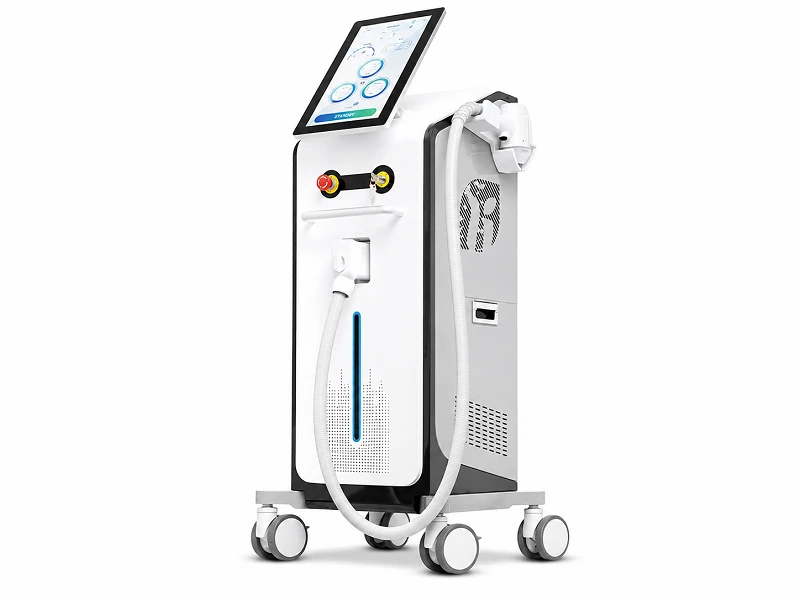
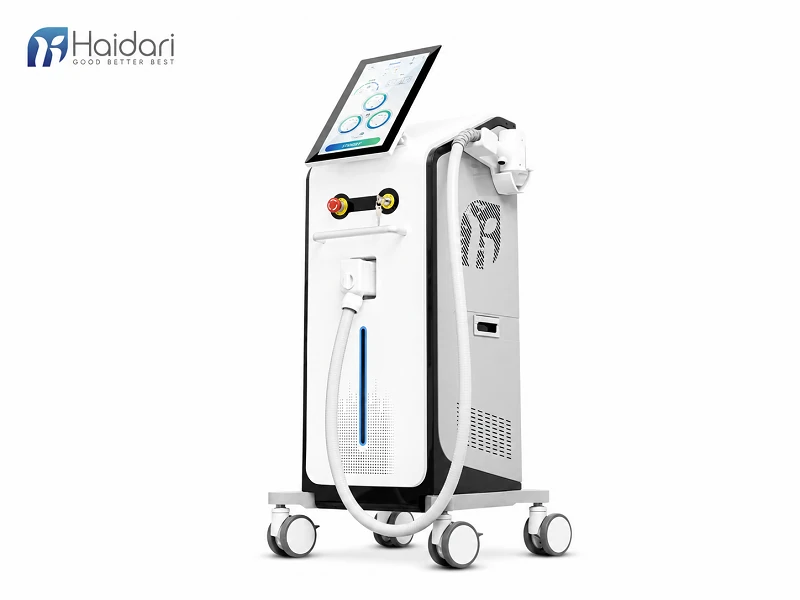
The LAMIS XL is a single-wavelength 808 nm diode platform built around the idea that comfort and output have to work together. It offers a concrete example of the points above. In practice, the diode ice laser machine suits clinics that run a full appointment book rather than a handful of treatments each day.
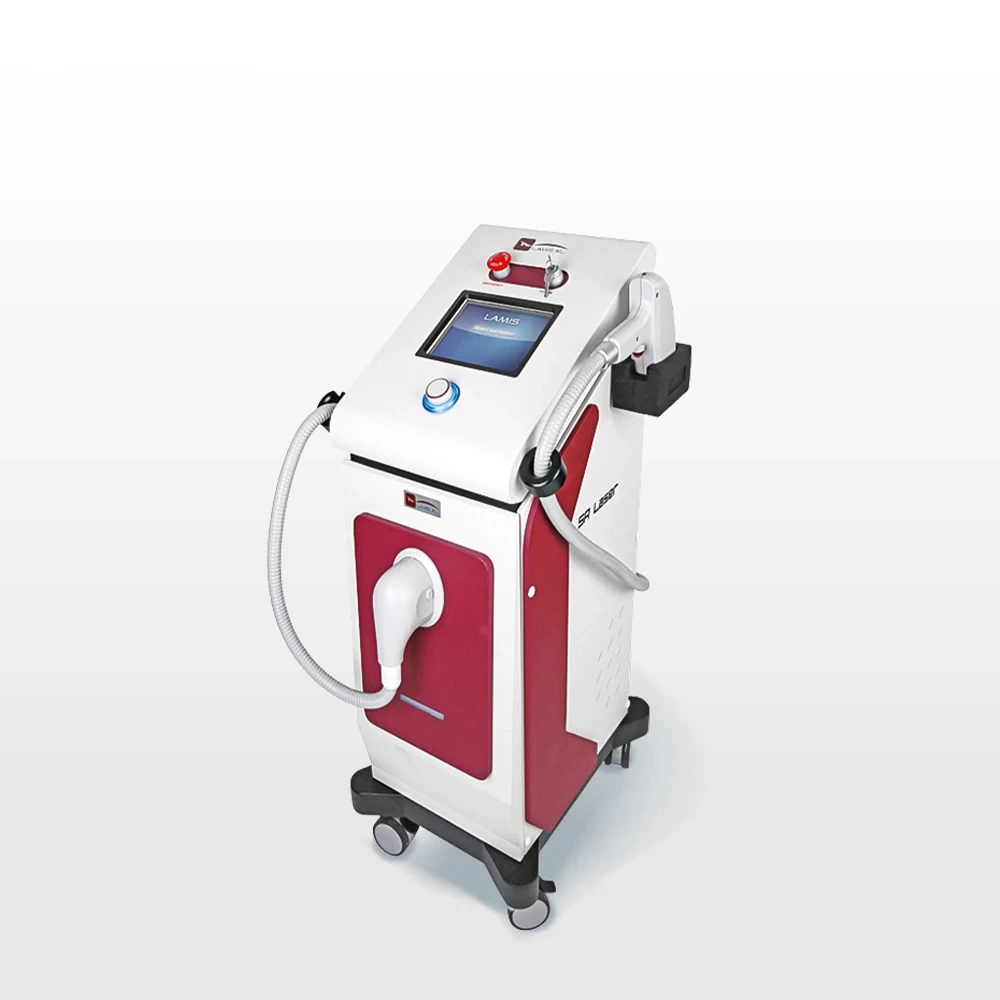
Continuous 5°C Sapphire Contact Cooling
The handpiece keeps a sapphire window at 5°C throughout treatment. Because the cooling stays active during the pulse, the epidermis remains protected while energy reaches the follicle. The design supports use across skin types, from light to dark, with suitable protocols for each. Patients tend to feel a brief snap instead of sustained heat, so sessions can move without long pauses.
HPFD Power Delivery and Beam Consistency
HPFD stands for High Power Forced Diode. In this platform it controls how power reaches the tissue. The goal is even beam density across the full 12 × 14 mm spot, so the edge of the treated area gets the same energy as the centre. Consistency matters more than a peak number. Uneven delivery leaves patches of hair behind and forces extra visits.
12 × 14 mm Spot Size and All-Skin-Type Coverage
A 12 × 14 mm spot covers large areas quickly. Full legs, backs, and chests take less chair time, which helps a clinic see more patients in a day. Smaller areas such as the upper lip and bikini line are handled by adjusting parameters with the same handpiece. The platform also supports skin tightening alongside hair removal, and its footprint of 350 mm × 550 mm × 1000 mm fits a standard treatment room. Distributors can request full OEM or ODM customization to match their own branding.
Frequently Asked Questions
Does cooling make treatment completely painless?
Cooling lowers discomfort a great deal, but sensation varies. Skin type, hair density, and treatment area all play a part. Most patients describe a cooled session as a short snap rather than a burn. Numbing cream is rarely needed, though sensitive areas may still feel tender.
Is contact cooling safe for darker skin types?
Contact cooling protects the epidermis, which matters when the skin holds more melanin. It lets the operator use settings that reach the follicle without overheating the surface. Protocols still need to match the individual, and sun exposure before treatment should be avoided.
How long does a full-leg session take?
Session length depends on spot size, pulse speed, and technique. Larger spots cover more ground per pulse, so a full-leg treatment is usually measured in tens of minutes rather than hours. Patients should allow extra time for consultation and preparation.
What upkeep does a cooling system need?
Routine care is straightforward. Keep the sapphire window clean, check the water level and filters, and follow the service schedule for the internal loop. Regular attention keeps the tip temperature stable and protects the laser bars from heat stress.
Conclusion
Comfort in laser hair removal is not a luxury extra. It grows out of controlled heat, steady cooling at the skin, and a machine that holds its output through a full day of appointments. Clinics that understand that link buy differently. They look past headline power figures and ask how a device behaves in routine use.
For practices ready to add or upgrade diode hair removal, the next step is a direct conversation about patient mix and daily volume. Request a quote and full technical details to see which configuration fits your clinic.