
How Does 808nm Diode Laser Hair Removal Machine Improve MedSpa Clinic Efficiency? Clinical Advantages of LAMIS XL HPFD Technology for All Skin Types
Introduction: The Demand for Efficiency and Experience Upgrades in the Medical Aesthetic Hair Removal Market
The global medical hair removal market is expanding quickly, yet many clinics are still running on outdated IPL systems or older laser platforms. Slow treatment speeds, inconsistent results, and high patient dropout rates are common frustrations — and they all take a toll on a clinic’s ability to grow.
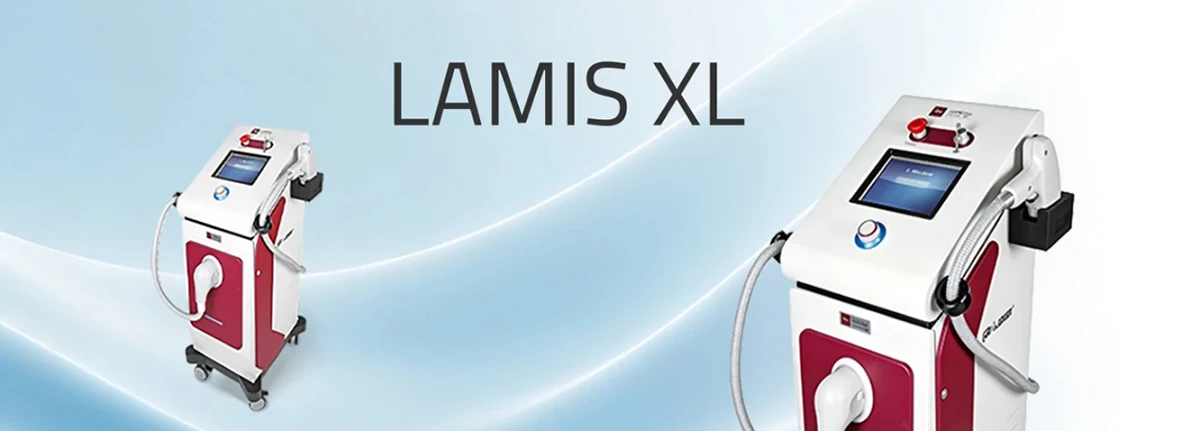
The LAMIS XL addresses these challenges with HPFD technology and a precision 5°C sapphire cooling system, delivering consistent, safe energy output across all Fitzpatrick I–VI skin types — with noticeably better patient comfort and more predictable clinical outcomes.
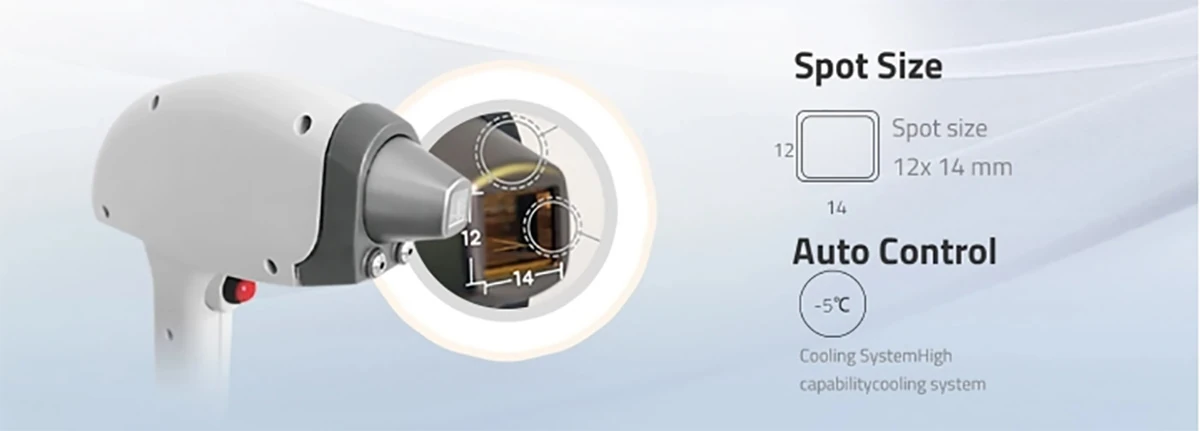
Its 12×14mm large spot size drastically cuts procedure time and boosts clinic patient throughput, while supporting dual hair removal and skin tightening functions for higher equipment ROI. As a premium 808nm diode laser hair removal machine, the LAMIS XL is the ideal upgrade for modern high-efficiency aesthetic clinics.
Core Technical Parameters
| Core Feature | Key Clinic Benefit |
| 808nm Diode Laser Wavelength | Safe for all Fitzpatrick I–VI skin types, precise hair follicle targeting |
| HPFD High-Power Diode Technology | Stable energy output, consistent treatment results, reduced staff operational error |
| 5°C Sapphire Contact Cooling | Full epidermal protection, less treatment pain, fewer post-procedure adverse reactions |
| 12×14mm Large Treatment Spot | 30–50% faster large-area treatments, higher daily patient throughput |
| Dual Hair Removal + Skin Tightening | Expanded service offerings, higher equipment ROI, increased clinic revenue |
Core Technology Mechanism
The consistent clinical performance of modern diode laser systems originates from the unique optical properties of the 808nm wavelength and its adherence to selective photothermolysis. When properly engineered, an advanced 808nm diode laser hair removal machine outperforms traditional IPL, 755nm Alexandrite, and 1064nm Nd:YAG devices in balanced safety, speed, and versatility for everyday clinic use.
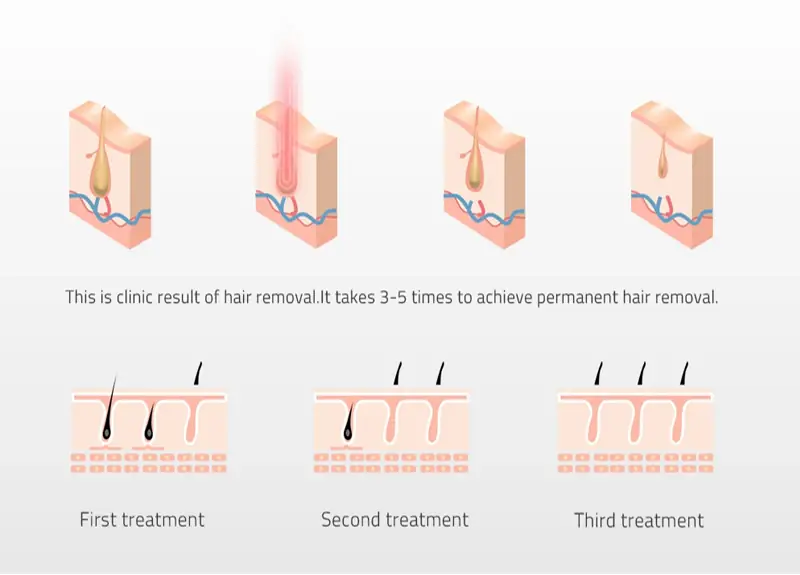
The core principle of laser hair removal is the selective photothermolysis theory proposed by dermatologists, which states that the energy of the laser wavelength is selectively absorbed by the melanin in the hair follicle, rather than by the epidermal tissue. The 808nm wavelength is located in the optimal absorption balance zone of hair follicle melanin: it can maintain the efficient absorption of hair follicle melanin, convert light energy into precise heat energy, and heat the dermal papilla and bulge area of the hair follicle to the permanent inactivation temperature, thereby destroying the regenerative ability of the hair follicle and achieving the effect of long-term permanent hair removal.
HPFD High-Power Forced Diode Technology: Core Upgrade for Clinical Stability and Efficacy
HPFD (High Power Forced Diode) technology is the foundational upgrade that differentiates the LAMIS XL from generic diode devices, making it a dependable laser hair removal machine for clinic environments with high daily treatment volumes. Traditional low-grade diode lasers often suffer from drifting energy output, uneven beam distribution, and inconsistent results after prolonged use, which harms clinic reputation and treatment standardization.
HPFD technology is an advanced power output and beam control system specifically designed for professional clinical applications. Its core lies in achieving forced constant power output and uniform beam coverage across the entire area through intelligent power calibration and precise pulse control modules. Unlike ordinary diode lasers, which experience energy decay and hot spot deviation during long-term operation, the HPFD system supports real-time dynamic adjustment of energy parameters, ensuring the stability and safety of beam density and power during treatment, and achieving 100% controllable and uniform energy output under all treatment parameter settings.
Clinical Comfort Upgrade: 5°C Sapphire Constant-Temperature Contact Cooling System
Patient comfort and safety are decisive factors for medspa retention rates. Legacy laser devices frequently cause excessive heat, post-treatment erythema, and discomfort, leading to abandoned treatment courses. The LAMIS XL machine upgrades standard clinical hardware by pairing core diode laser architecture with a precise 5°C sapphire contact cooling module, transforming the usability of professional 808nm diode laser hair removal machine systems for all patient profiles.
Unlike air cooling and semiconductor cooling systems in conventional devices, the LAMIS XL’s sapphire cooling system can maintain a constant tip temperature of 5°C during the entire treatment process, using a pre-contact real-time cooling mode. Before the laser energy acts on the skin, the sapphire probe first cools the epidermal tissue, constricts superficial capillaries, and reduces epidermal nerve sensitivity. During laser irradiation, the continuous low temperature can isolate thermal energy, prevent excessive heat accumulation on the skin surface, and completely protect melanin-containing epidermal cells from thermal damage.
Safe and Effective for All Skin Types: Reliable Results for Fitzpatrick I–VI
The 808nm wavelength has a unique, balanced absorption curve, which can preferentially target hair follicle melanin while protecting epidermal melanin. This inherent advantage makes it the best laser hair removal machine for dark skin, superior to other wavelengths of laser hair removal.
On the LAMIS XL, wavelength advantages are amplified by the synergy between HPFD stable energy control and 5°C real-time sapphire cooling. From a clinical perspective, this enables the implementation of standardized and safe treatment protocols that cover the entire range of Fitzpatrick skin types I-VI. Clinics no longer need to equip themselves with multiple devices for different skin tones, thus effectively expanding their customer base to cover different ethnic skin types and tapping into the previously underserved market of dark-skinned patients, thereby increasing business revenue.
Clinic Commercial Value Analysis
First, compared to traditional equipment, the large spot rapid treatment mechanism can increase daily treatment capacity by 80%, enabling clinics to serve more patients during peak hours and maximize the use of space and labor costs.
Second, the machine reduces reliance on manual operation. Thanks to HPFD’s automatic energy calibration, uniform beam output, and intuitive clinical operation logic, new operators can master standardized treatment procedures quickly. This lowers training costs and reduces operational errors caused by manual parameter adjustment, stabilizing overall clinic service quality.
Third, optimized patient experience drives organic word-of-mouth growth. Near-painless treatment, zero obvious downtime, stable efficacy, and dual-functional value greatly improve patient satisfaction. Satisfied clients generate higher repurchase rates and active referrals, forming a sustainable customer growth loop and reducing clinic customer acquisition costs.
In terms of the investment return cycle, high-quality multi-functional clinical laser equipment features long service life and low maintenance costs. For most professional medspas and chain skincare clinics, the upgraded laser hair removal machine for clinic configuration shortens the equipment ROI cycle significantly compared with single-function legacy devices, bringing stable long-term profit growth.
Treatment Efficiency Breakthrough: Clinical Value of 12×14mm Large Spot Size Design
Clinic profitability relies heavily on treatment speed and daily patient throughput, making spot size one of the most commercially critical hardware parameters for aesthetic laser devices. The LAMIS XL machine features a 12×14mm large uniform spot size, a deliberate clinical design that addresses the slow treatment speeds of older small-spot lasers. Most entry-level diode devices adopt spot sizes below 10×10mm, requiring repeated overlapping pulses and prolonged operation time for large body areas such as legs, backs, and full arms.
FAQ
Q1: Is an 808nm diode laser suitable for dark skin patients?
A: Yes. Equipped with HPFD stable energy output and 5°C constant sapphire cooling, the LAMIS XL safely treats all Fitzpatrick I–VI skin types. Its wavelength selectively targets follicular melanin without overheating epidermal melanin, making it the best laser hair removal machine for dark skin in mainstream clinical aesthetic equipment.
Q2: How much faster is large-spot 808nm laser treatment compared with traditional devices?
A: The 12×14mm spot size typically cuts treatment time for large areas by 30–50%. In practice, that means clinics can fit more appointments into a day without extending hours or adding staff.
Q3: Can this machine perform skin tightening in addition to hair removal?
A: Yes. Controlled dermal heating during laser treatment stimulates collagen contraction and regeneration, improving skin texture and mild laxity. This dual-function design improves overall equipment ROI for any laser hair removal machine for clinic deployment.
Conclusion
The shift toward more efficient, skin-inclusive laser platforms is already underway. 808nm diode technology has become the clinical standard for hair removal — backed by solid wavelength science, broad skin type compatibility, and a strong track record in practice. For clinics still running older equipment, the case for upgrading is less about keeping up with trends and more about meeting what patients now expect: faster sessions, less discomfort, and consistent results. Multi-function diode platforms like the LAMIS XL are well-positioned to remain the workhorse of medical hair removal as the market continues to evolve.
Ready to upgrade your clinic’s equipment? Contact our team today.